
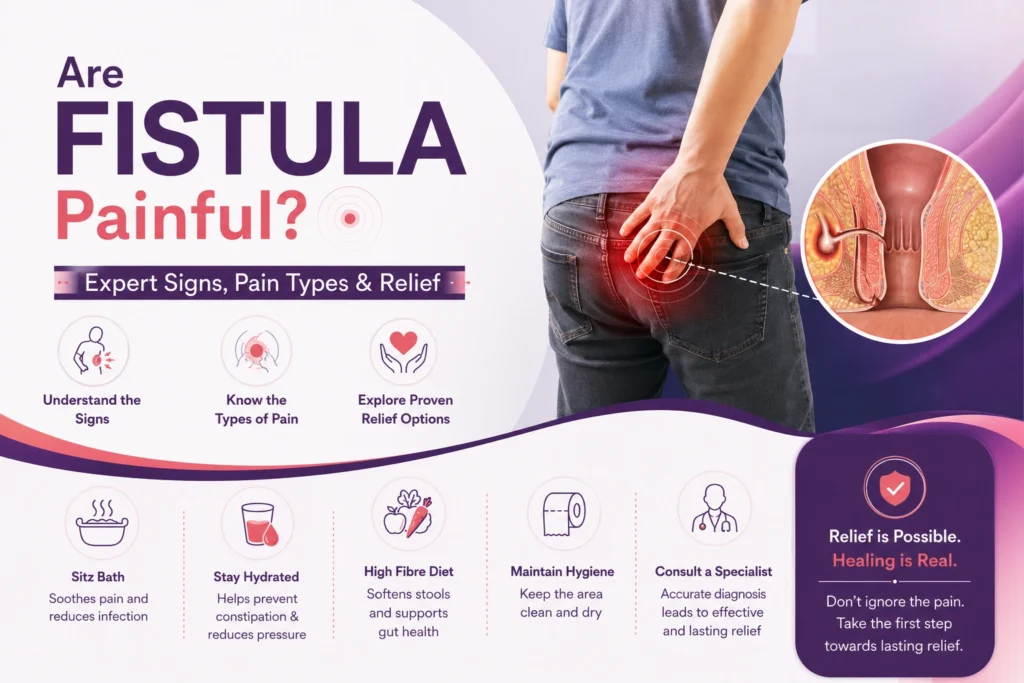
This scenario is more common than you think—you feel pain in the anal region, you research around the internet, and feel that your symptoms are because you have piles. You might find temporary relief through popular internet remedies, only for the pain to return stronger each time. A visit to the doctor then reveals that you are actually having fistula, another common colorectal condition, but one that typically requires medical intervention to fully resolve.
Fistula naturally sounds like a scary medical term, something which occurs so rarely. But it is simpler and far more common than most people think. Unlike piles, which are swollen blood vessels, a fistula is a tube-like structure connecting an infected gland in the anus to an opening on the skin of the buttocks. This difference is why the pain feels different and also constant.
Home remedies do help in easing pain and discomfort, but cannot close the tunnel on their own; which is why doctors insist on procedures to remove the fistula tube/tract. This article details on fistula pain, and proven ways to manage it to help you understand it better.
Anal fistula pain symptoms
If most of the below symptoms feel familiar, then it is possible that you might be having fistula.
- Constant and throbbing pain: Unlike feeling pain and soreness just for a short while or in bursts, fistula pain is usually a persistent, deep ache around the anal area caused by inflammation in the fistula tract.
- Pain from the inbuilt pressure: You may feel more pressure when doing activities such as sitting for long periods, walking, coughing, or passing bowel movements. as a result, there is an increase in pain at such times.
- Alternating drainage and building of pressure: Infected glands in the body involves a lot of fluid production and discharge. The accumulated fluid in the anal glands is discharged through the fistula tract. This discharge happens as fluid builds up inside the tract. When the fistula tract is full, the throbbing pressure increases and when it drains, you may feel temporary relief before the cycle again repeats.
- Visible swelling and redness: The skin around the external opening of the fistula tract often becomes swollen, red, and tender to the touch.
- Skin irritation: All the fluid discharge can cause persistent itching, raw skin feeling, and discomfort on the buttocks skin.
- Recurring infections or fever: If the anal gland infection remains active or the fistula tract remains blocked or clogged, you may experience low-grade fevers, and chills.
What does fistula pain feel like?
Fistula pain can be quite different from other common anal conditions like piles and anal fissures. To clearly help you understand the differences, here is a table of the three diseases—anal fistula, piles and fissures. Once you understand the differences between the pain, it is easy to zero in on what you may be facing much more easily.
| Symptom | Anal Fistula | Piles | Anal Fissure |
| What it is | An infected tube like structure connecting an inside gland to the skin | Swollen or inflamed blood vessels in the rectum/anus | A small tear or crack in the lining of the anal canal |
| Type of pain | Constant, deep, throbbing ache that worsens under pressure | Mild ache, itching, or heavy feeling | Sharp, severe, cutting/tearing pain during and right after bowel movements |
| Pain duration | Persistent throughout the day, it can also increase with fluid buildup | Comes and goes; most times its worse after sitting for long periods | Spikes sharply during bowel movements and can last for minutes to hours after |
| Other symptoms like pressure | Pain usually cannot be relieved for longer time; it increases as fluid builds up and temporary relief occurs right after it drains | Pain is relieved by reducing strain or using topical creams | Pain relaxes slowly after the anal muscles stops spasming |
| Other signs | A small hole opening near the anus | Soft bulges or lumps around the anal opening | A visible tiny tear or crack in the skin |
Gentle and proven ways to relieve fistula pain
Fistulas are caused when the body wants to drain out any collected or infected liquids from inside the body. Once the infected waste is drained out completely, the tunnel-like structure or fistula tract remains, and does not go off naturally. Hence, a fistula cannot be cured permanently without any surgical interventions.
Having said that, the symptoms of a fistula can be managed naturally at home.
- Take warm sitz bath daily: Using a sitz bath soothes the infected area, improves blood flow, and helps to keep the fistula tract clean. Try soaking the area in warm water for 10–15 minutes daily.
- Hydration: Constipation is one of the biggest enemies of fistula. Passing hard stool increases the pain and pressure felt on the fistula tract. If water is getting too boring, try other hydration sources like whole fruit juices, smoothies, or even the plain old buttermilk. Try to avoid caffeine drinks like tea and coffee as they can worsen constipation.
- High fibre diet: This works in the same way as hydration to soften the stools and pressure felt during bowel movements. Think steamed veggies, all the fruits beginning with the letter P (like plum, prunes, papaya), and chia seeds are excellent for making soft stools.
However, it is important to understand that there is no natural way to cure a fistula permanently. Thus, you must take proactive steps to visit your colorectal specialist as soon as you notice the symptoms. Simple fistulas can be cured easily with effective laser procedures and are often done as out-patient procedures.
Dealing with anal pain can feel very overwhelming, and also can border on frustrating and scary, especially when popular internet treatments cannot give relief. After reading this article, if you feel your symptoms align with an anal fistula, it is a good and strong start to understanding why the pain you feel is not stopping. While managing daily discomfort with sitz baths, proper hygiene, and dietary changes can offer temporary relief, it is always best to get an accurate diagnosis from a specialist. Look no further than the highly empathetic and caring colorectal specialists at Smiles gastroenterology Centre, Bengaluru. The end to the constant and bugging pain is just a small consultation away.